

What can a green space mean to a city and its residents? A place to rest, a garden that provides food, a space for learning and socialising – or an underused area whose potential is yet to be recognised? These were the questions that brought participants together during the “Green Spaces, Safe Places” campaign, held from 5 to 10 October 2026 in Sarajevo.
Through three events and a participatory online mapping activity, the campaign opened a conversation about how we protect, use and experience urban and peri-urban green spaces. Rather than limiting the discussion to their importance, the campaign brought together expert knowledge, citizens’ experiences, practical work and local stories.
More than 250 citizens, students, experts, representatives of public institutions and academia, agricultural producers and other interested participants took part in or visited the campaign activities. Their implementation was made possible through cooperation with numerous local partners and co-organisers, including the Faculty of Agriculture and Food Sciences of the University of Sarajevo, the City of Sarajevo, Second Gymnasium Sarajevo and OPZ Sinergija Plus.
Green spaces as places of production and dialogue
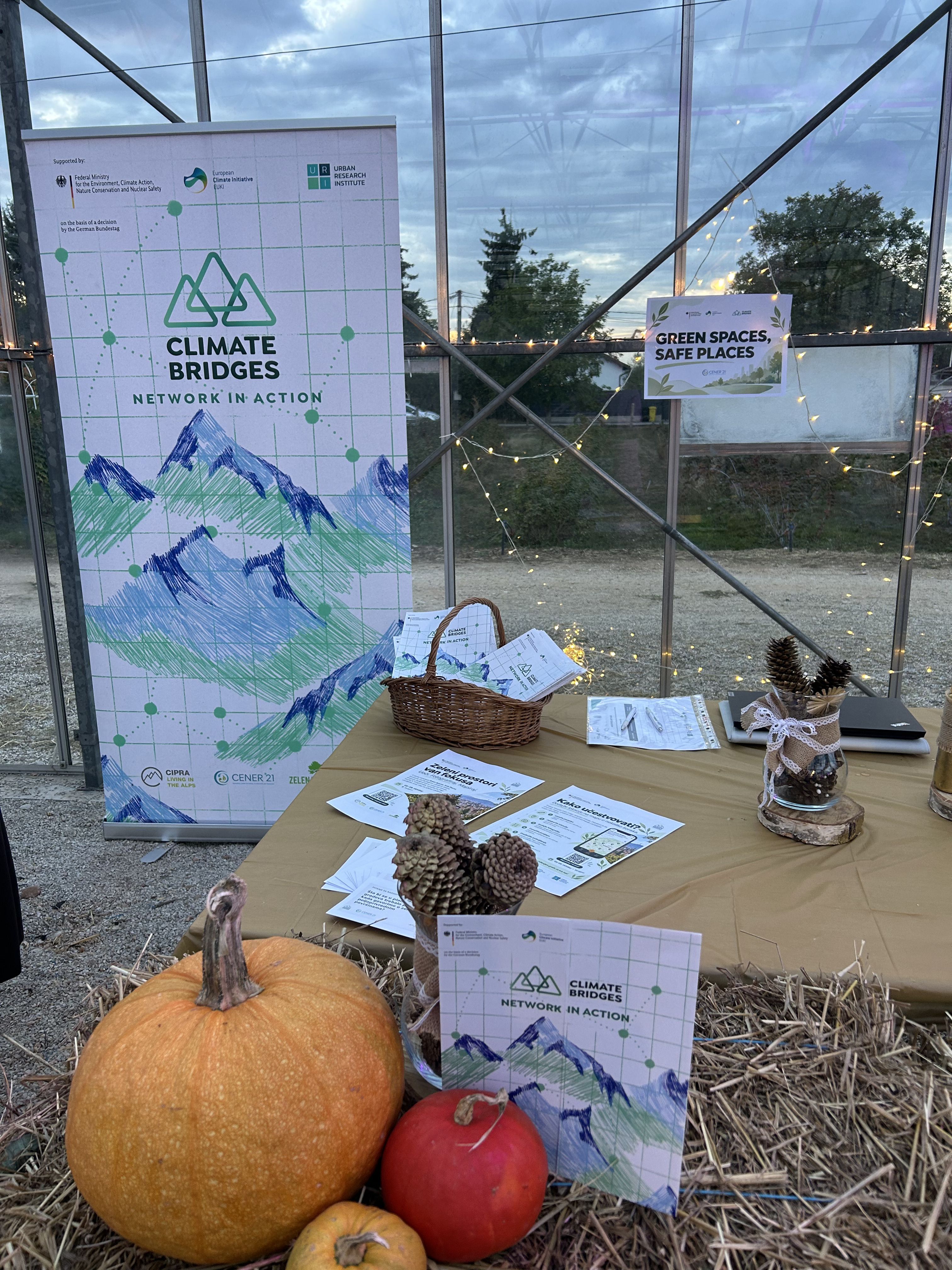
The campaign began on 7 October with the Green House Party, organised in cooperation with the Faculty of Agriculture and Food Sciences of the University of Sarajevo as part of AGRICONFERENCE. More than 100 participants visited the event throughout the evening.
The programme opened with the thematic tour “Green Spaces That Feed” at the Faculty’s experimental site. Participants had an opportunity to see first-hand how green spaces can support food production, research and education. The tour was followed by an informal exchange of professional and personal experiences related to urban agriculture, local food production and the potential of underused green spaces.
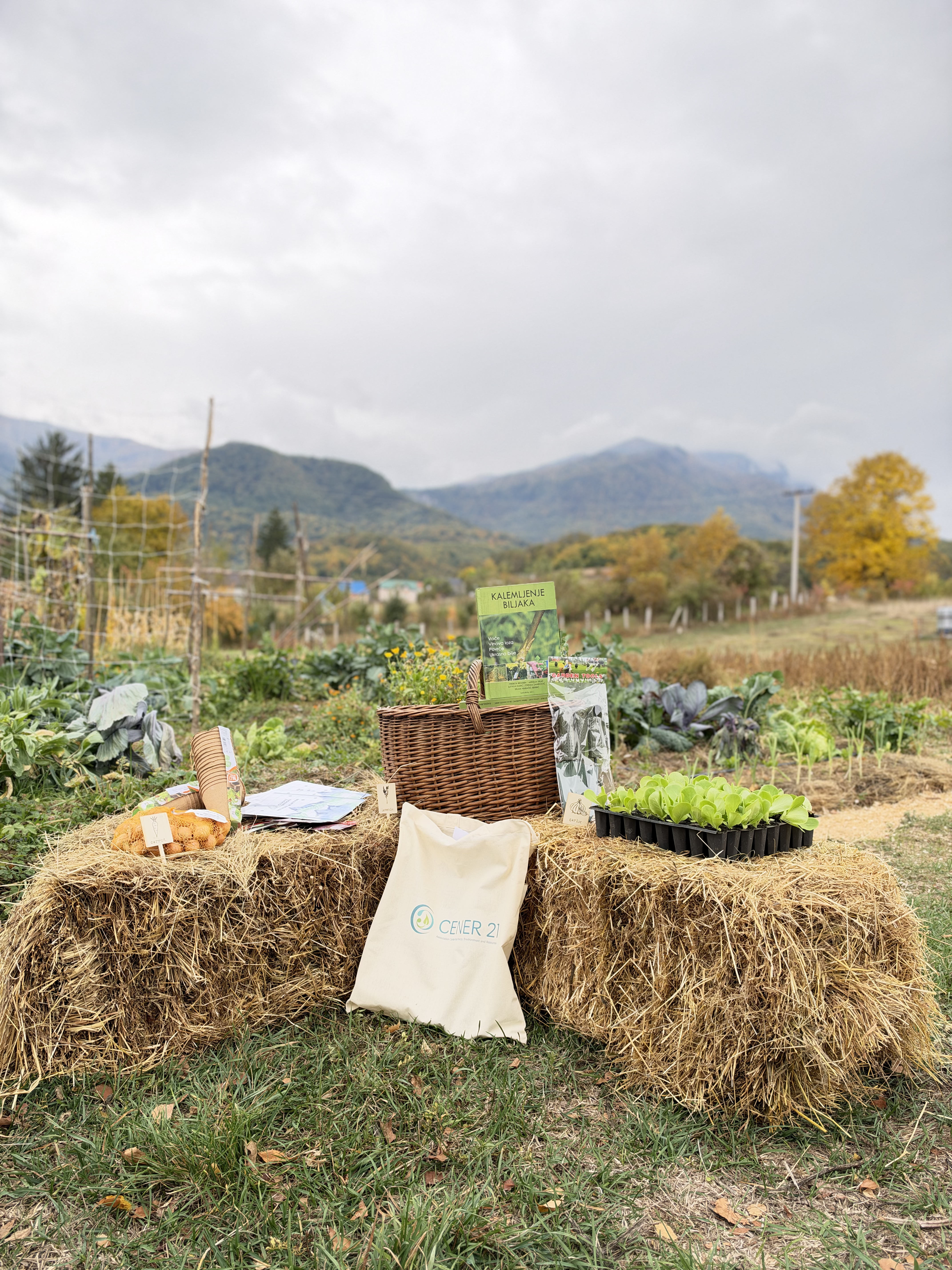
The relaxed setting created space for dialogue among experts, representatives of public institutions, producers, students and other conference participants. Locally produced goods displayed during the event offered an additional, tangible link between green spaces and food.
Gardens as witnesses to Sarajevo’s resilience
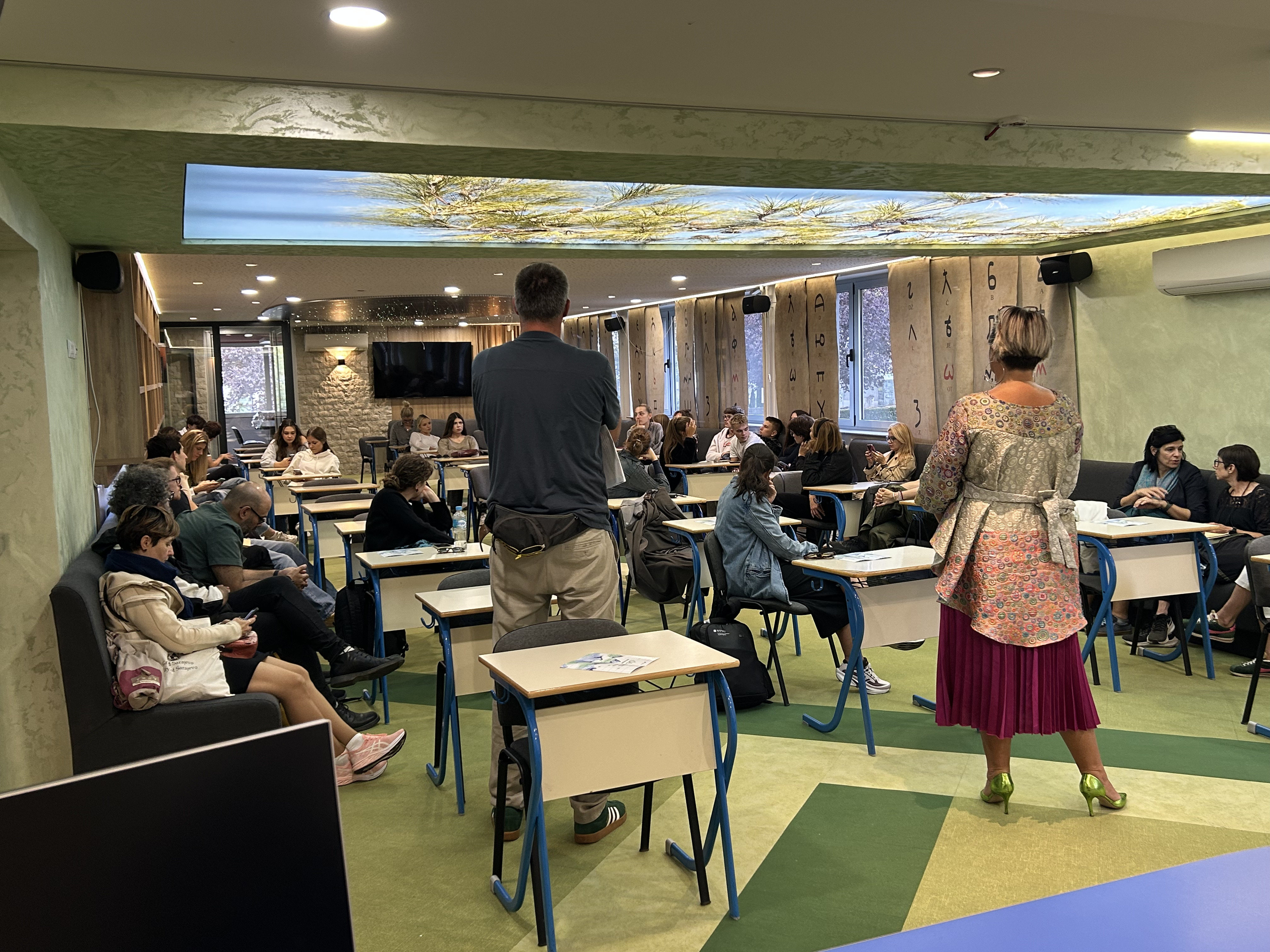
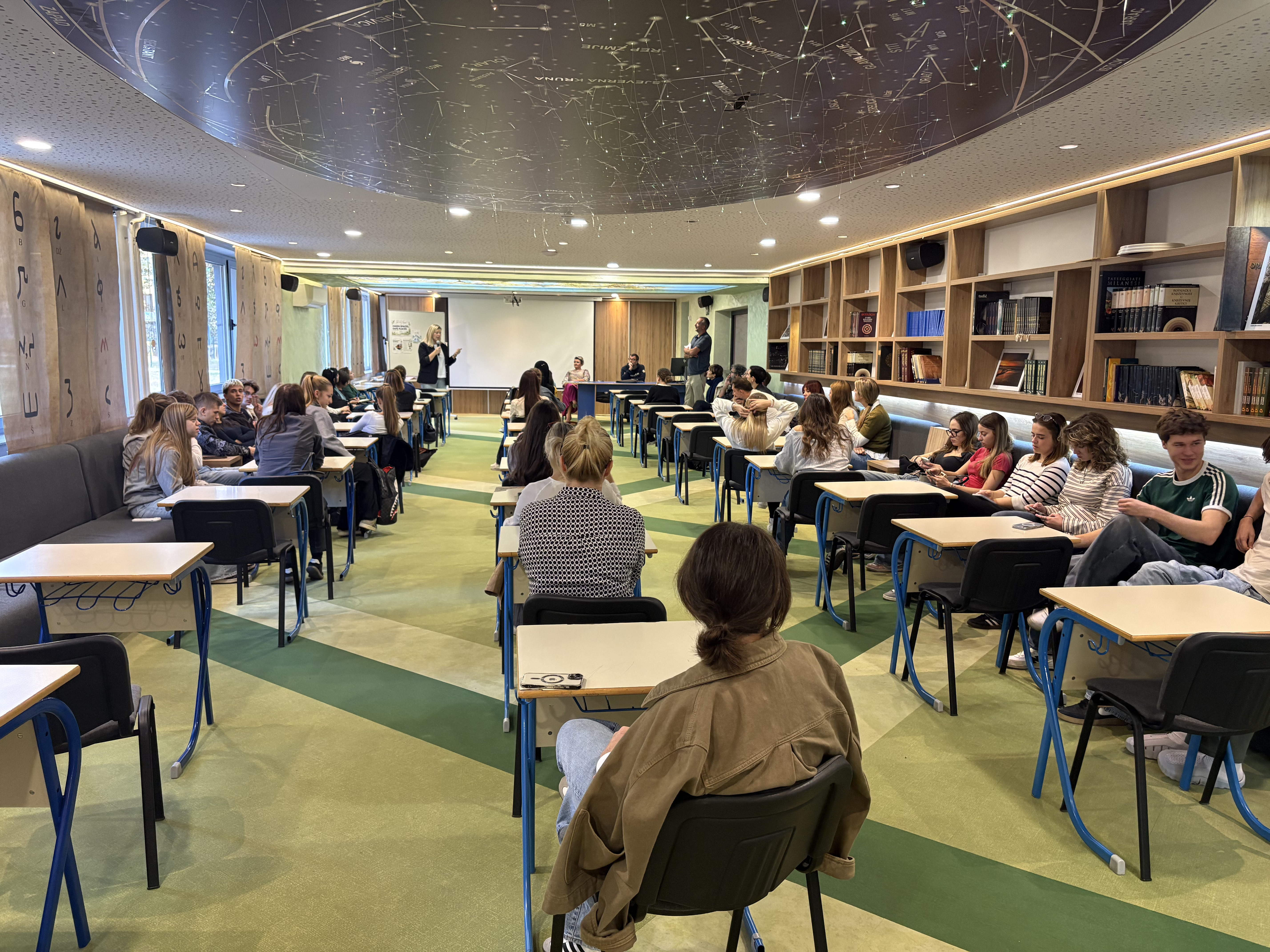
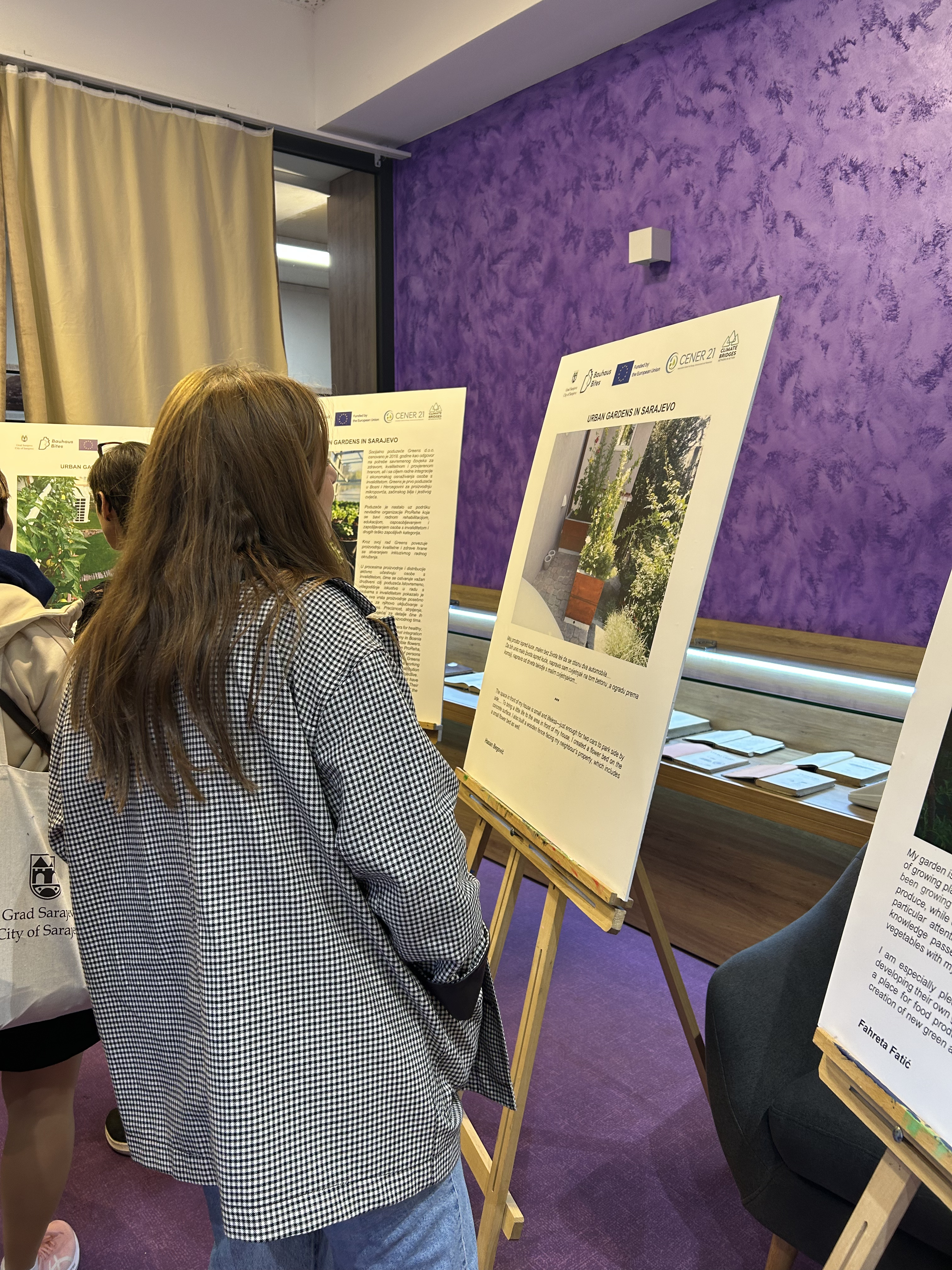
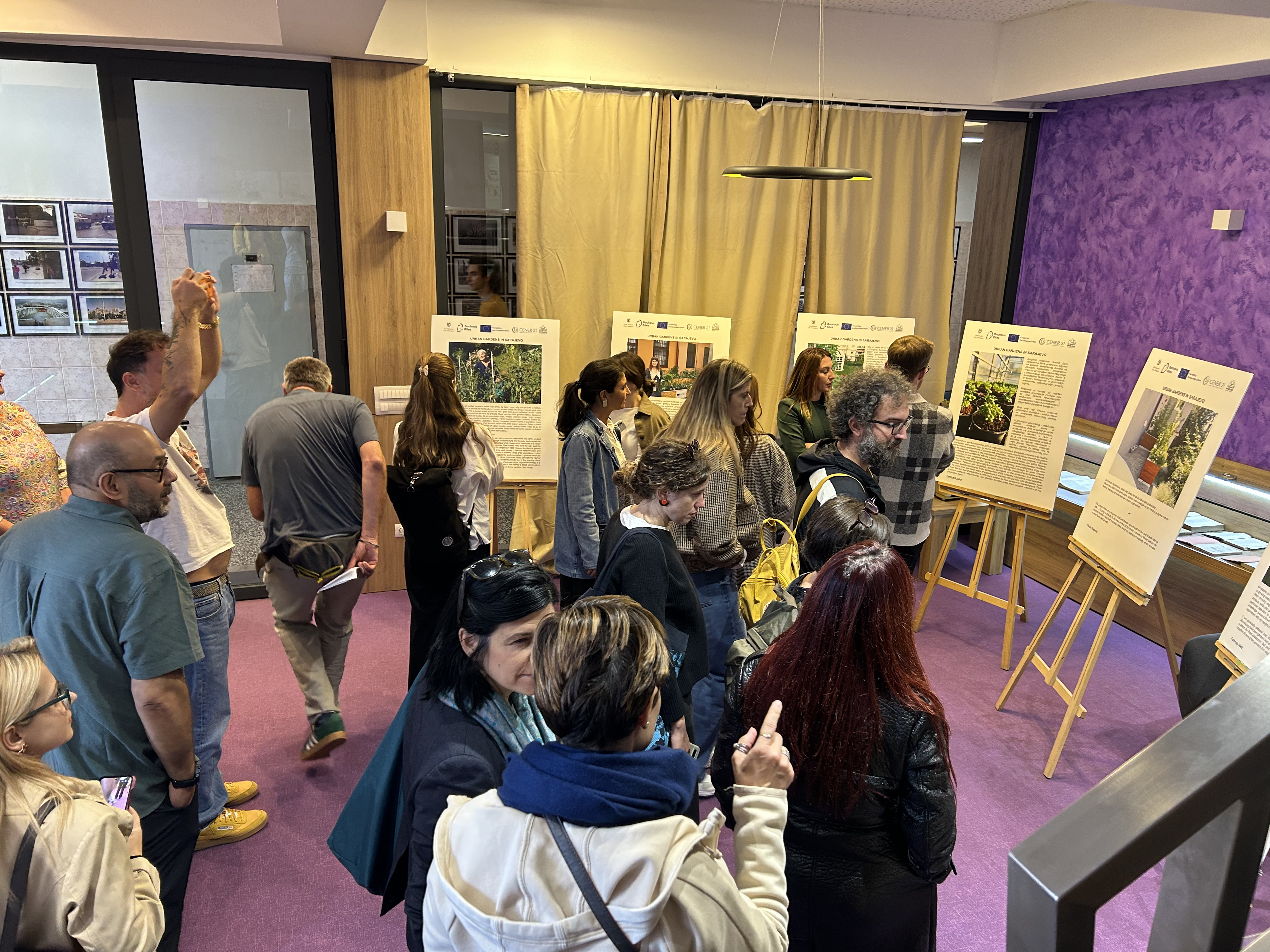
The following day, Second Gymnasium Sarajevo became a meeting place for photographs, memories and personal stories of urban gardening. The exhibition showed that urban gardens are more than spaces for growing food – during some of the most challenging periods, they have also been places of resourcefulness, hope and mutual support.
Photographs and testimonies collected through an open call issued by the City of Sarajevo presented the development and importance of urban gardening from the wartime and post-war periods, through the COVID-19 pandemic, to the present day. Around 50 participants attended the opening, presentation of the photographs and accompanying programme, while more than 100 students and members of the wider public visited the exhibition throughout the day.
The participants were addressed by Dženisa Buljugić, Principal of Second Gymnasium Sarajevo, and Ksenija Ostriž, Deputy Mayor of Koprivnica, who presented her city’s experience. Darjan Bilić, founder of OPZ Sinergija Plus, shared his story of urban food production and the cooperative’s development, while the programme was moderated by Šemsudin Maljević.
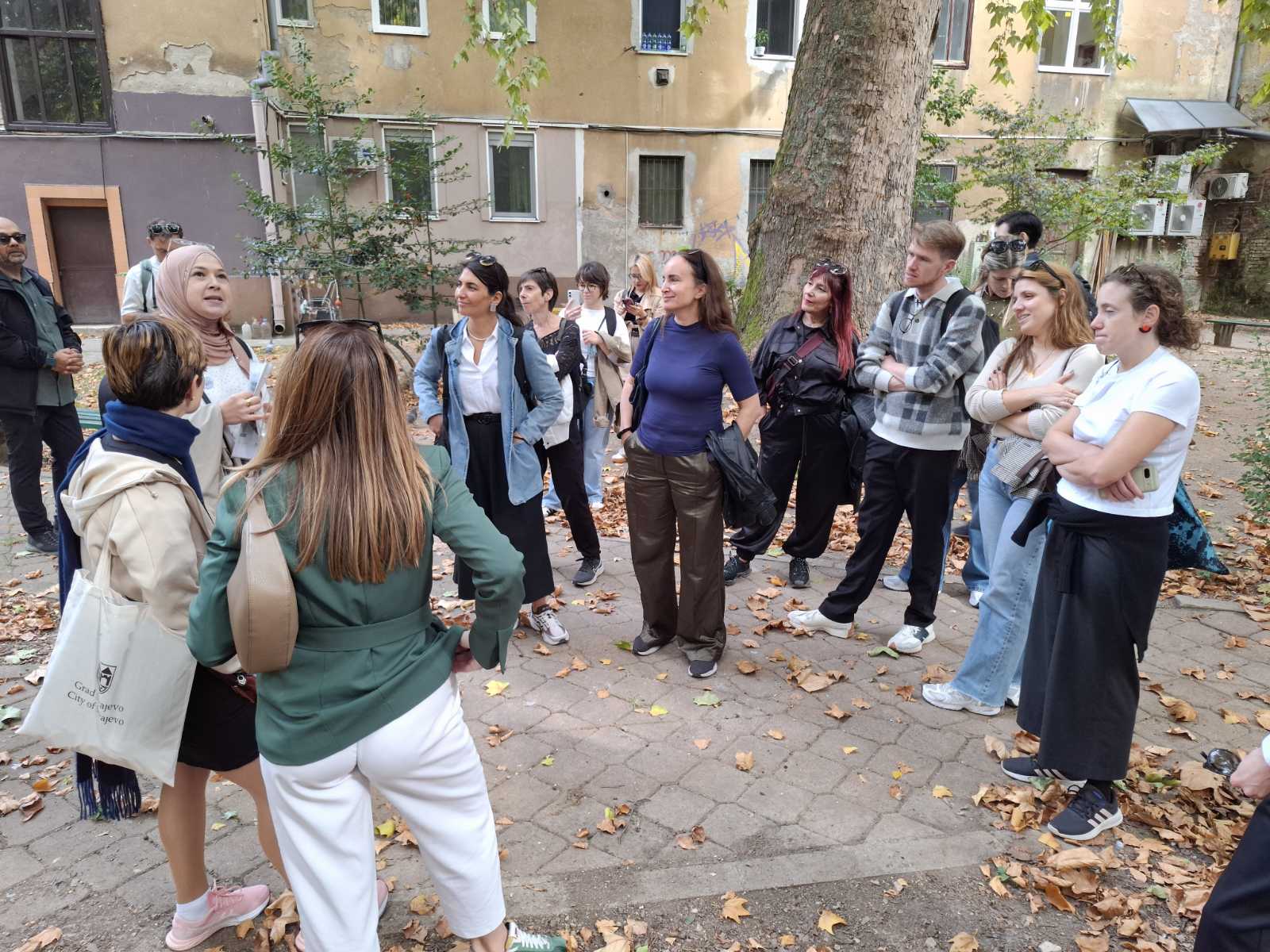
The exhibition was followed by the “Sarajevo Hidden Gems” walk, during which participants discovered lesser-known green spaces and hidden green pockets within the city’s neighbourhoods. With the participation of City of Sarajevo representatives, including Lejla Bešlagić and Amar Popara, the walk showed that valuable green spaces often exist right beside us, even though we rarely notice them in our everyday movement through the city.
From crop-rotation knowledge to practical work
For the campaign’s final activity, participants left the urban centre and travelled to the OPZ Sinergija Plus site in Pazarić, which offers residents an opportunity to use their own plots for growing vegetables.
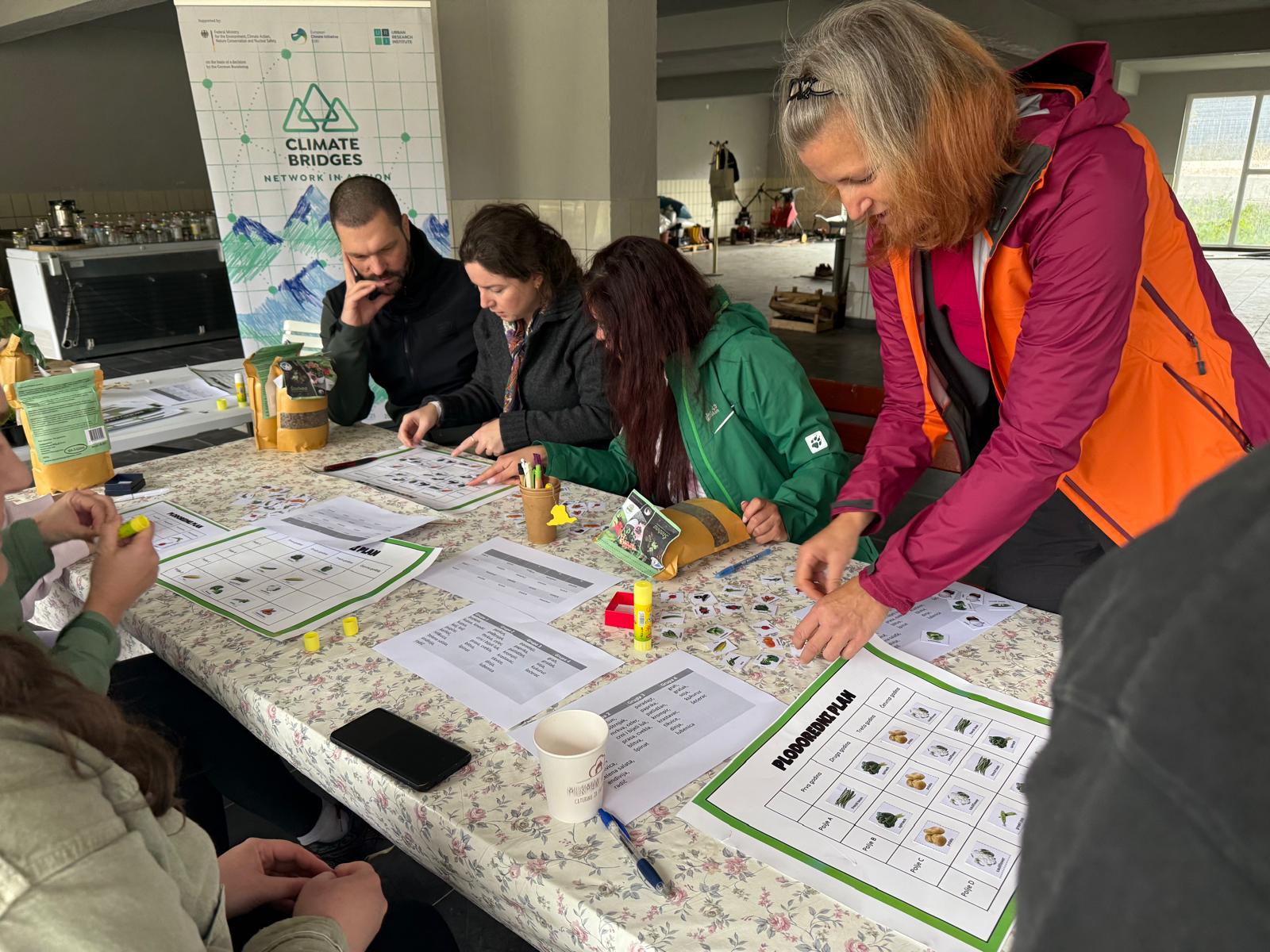
The workshop “Green Spaces That Feed: Urban Gardens and the Importance of Crop Rotation” was led by Associate Professor Ćerima Zahirović Sinanović from the Faculty of Agriculture and Food Sciences of the University of Sarajevo. Around 20 participants learned about the basic principles of crop rotation and its importance for plant health, soil quality and sustainable food production.
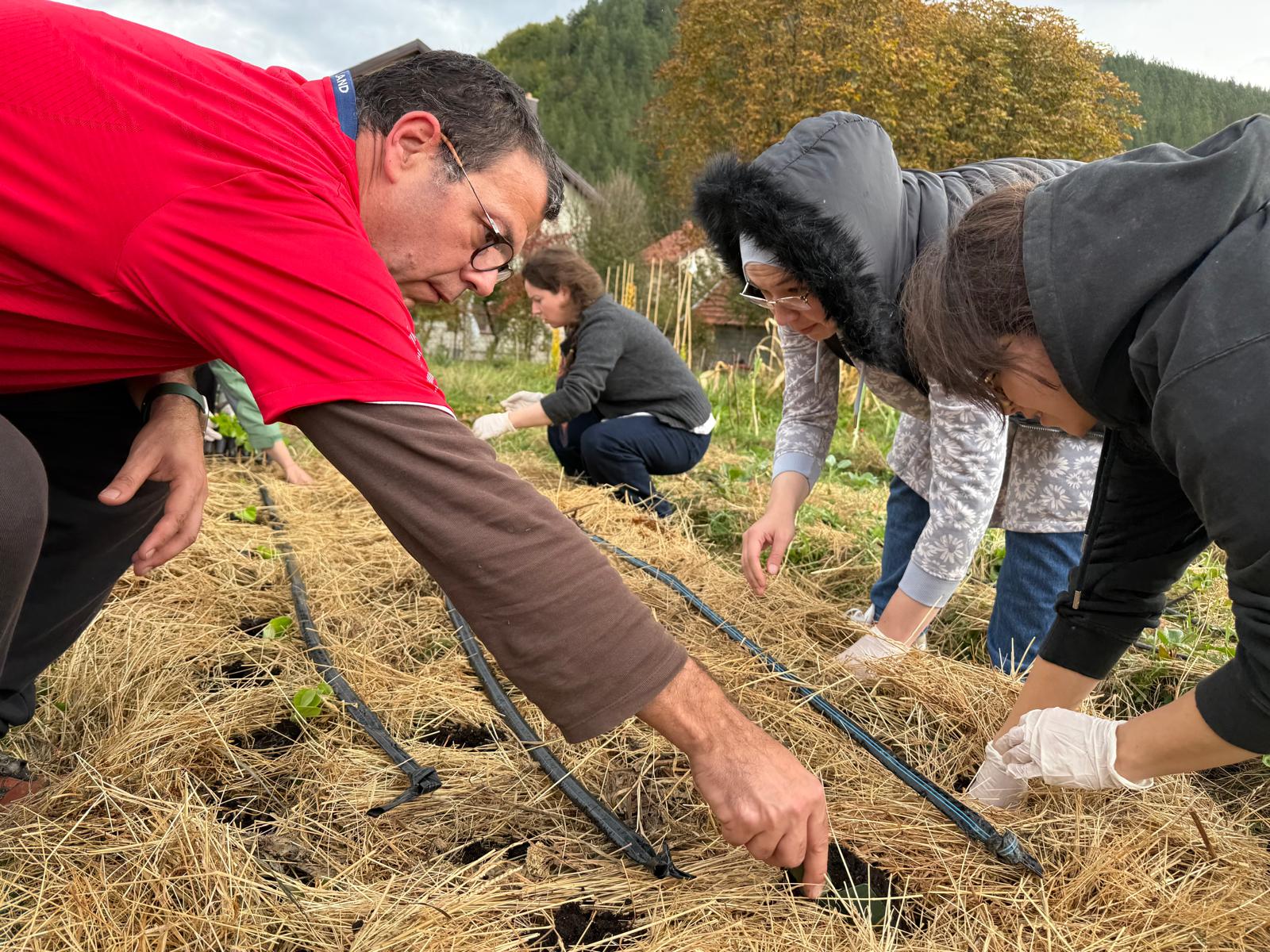
The knowledge gained did not remain theoretical. Participants developed their own crop-rotation plans and then immediately applied what they had learned through practical outdoor work. Neither the rain nor the strong October wind disrupted the positive atmosphere, conversation and sense of togetherness, while the youngest participants joined the activities with particular enthusiasm.
The workshop showed that taking the first step towards creating one’s own garden does not always require extensive space or resources. Knowledge, motivation and a willingness to see the available space as an opportunity are equally important.
Citizens mapped green spaces that had fallen out of focus
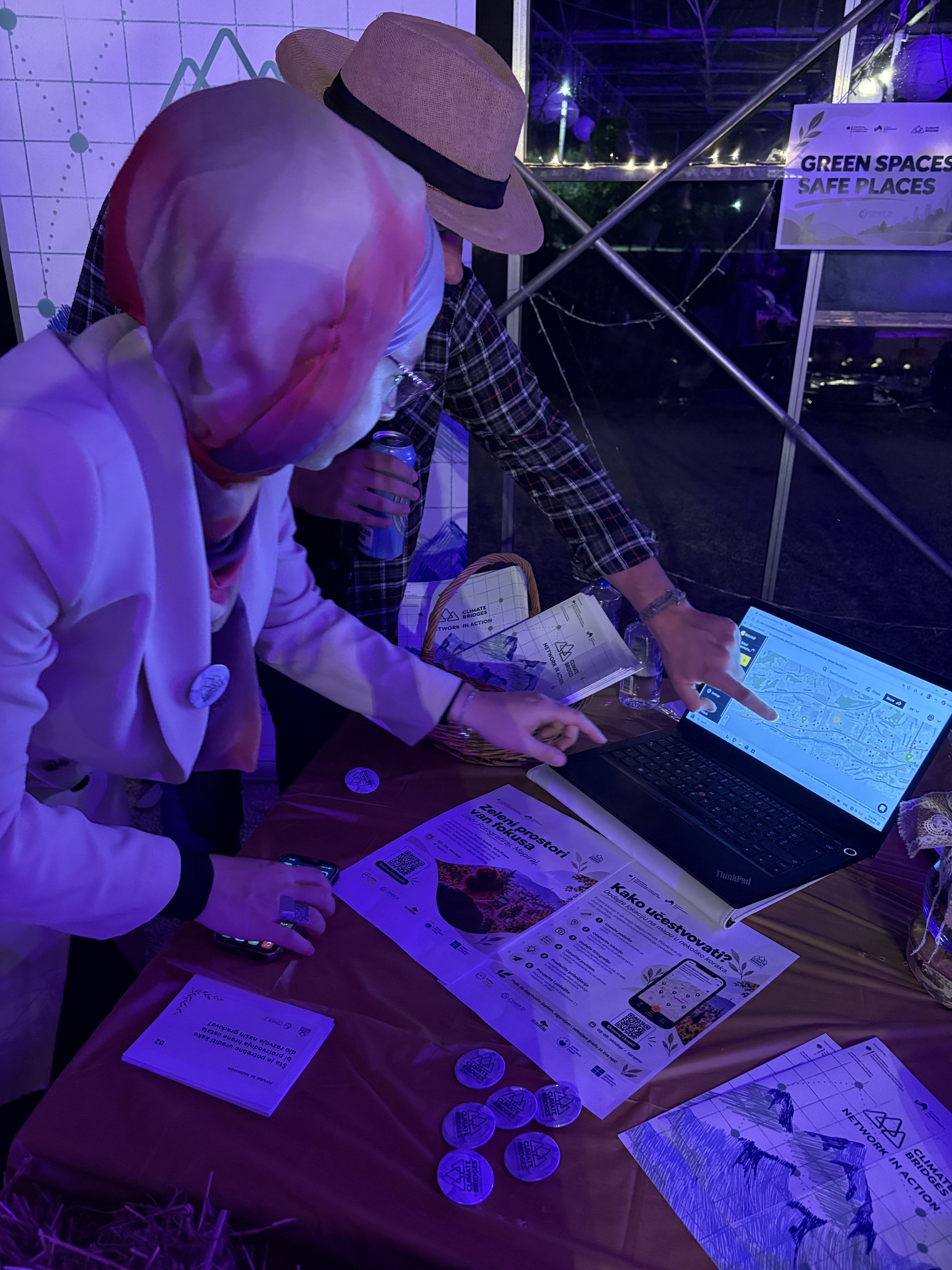
While the events took place at different locations, citizens were also able to participate online throughout the campaign. The participatory activity “Green Spaces Out of Focus – Spot. Photograph. Map.” enabled them to use the Ushahidi platform to identify neglected, unmanaged or underused green spaces across Sarajevo.
For each marked location, citizens could upload a photograph, describe its current condition and suggest how the space could be protected, improved or used more effectively. In this way, more than 30 green locations across Sarajevo were documented.
The purpose of the mapping activity was neither to promise an intervention at every location nor to replace official channels for submitting municipal service requests. Its aim was to make neglected spaces more visible, gather citizens’ observations and open a conversation about their potential future uses. The collected results may provide a basis for further dialogue with local stakeholders and for the development of future initiatives and projects.
The map of submitted locations is available at:
https://greenspaces.ushahidi.io/map
A green space is not an empty space
The campaign brought together two complementary messages. The first is that citizens can contribute to greener communities through gardening, knowledge-sharing and small local initiatives, even when space and resources are limited. The second is that neglected and underused areas are not empty spaces – they have the potential to become places that feed, connect, educate and strengthen community resilience.
It is precisely through the combination of citizen engagement, expert knowledge and institutional support that green spaces can gain a more prominent role in Sarajevo’s future development.
The “Green Spaces, Safe Places” campaign was implemented within the Climate Bridges – Network in Action project, financed through the European Climate Initiative (EUKI).