
CENER 21 – Centre for Energy, Environment and Resources, as the technical partner and co-organizer of the City Action Lab (CAL) process, in cooperation with the City of Sarajevo, successfully organized the first series of CAL workshops within the Commit2Green project for the Ciglane pilot area. The workshops brought together experts, institutional representatives, and local community members to jointly identify challenges, needs, and opportunities for improving urban spaces through Nature-Based Solutions (NBS).
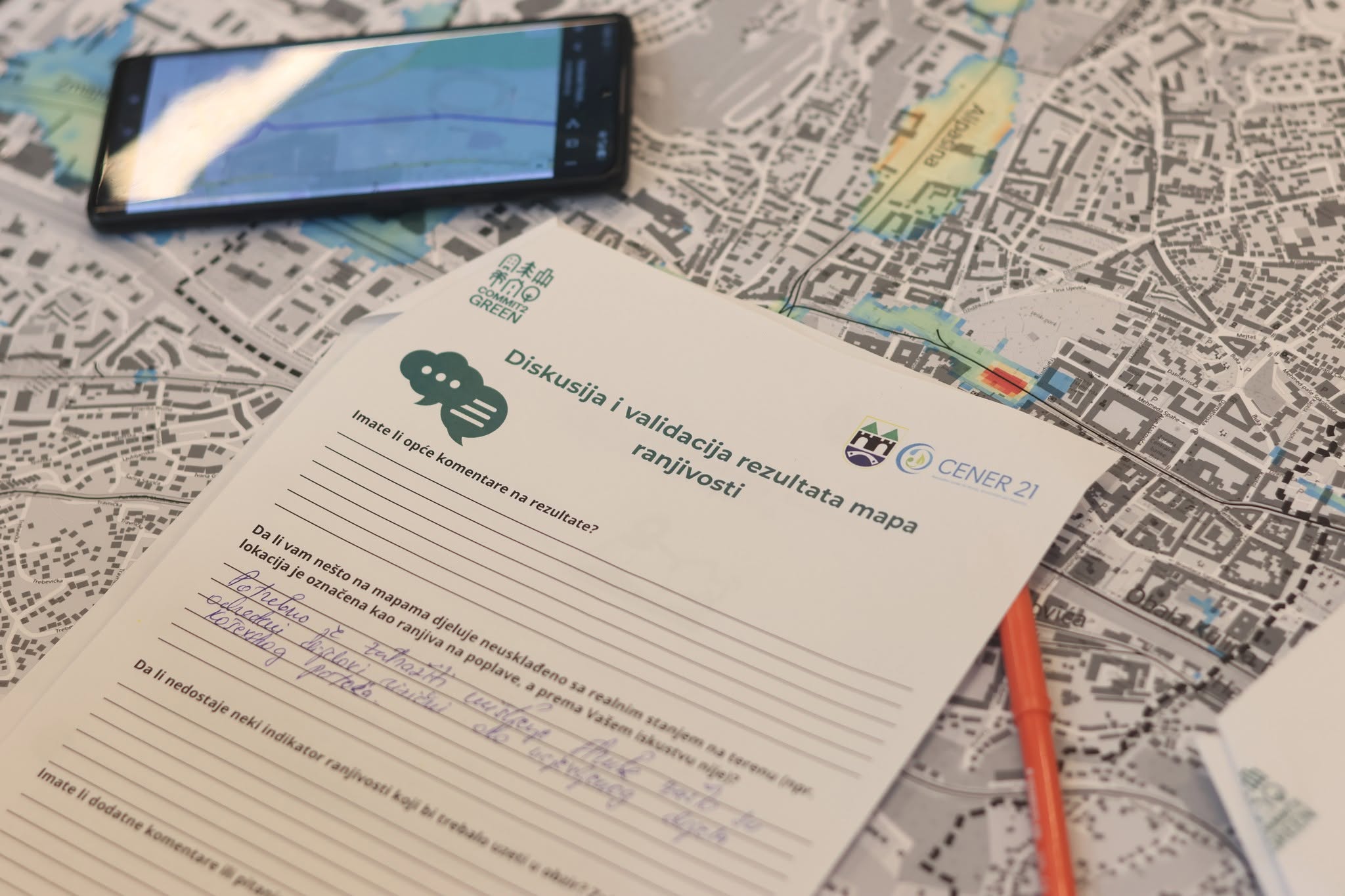
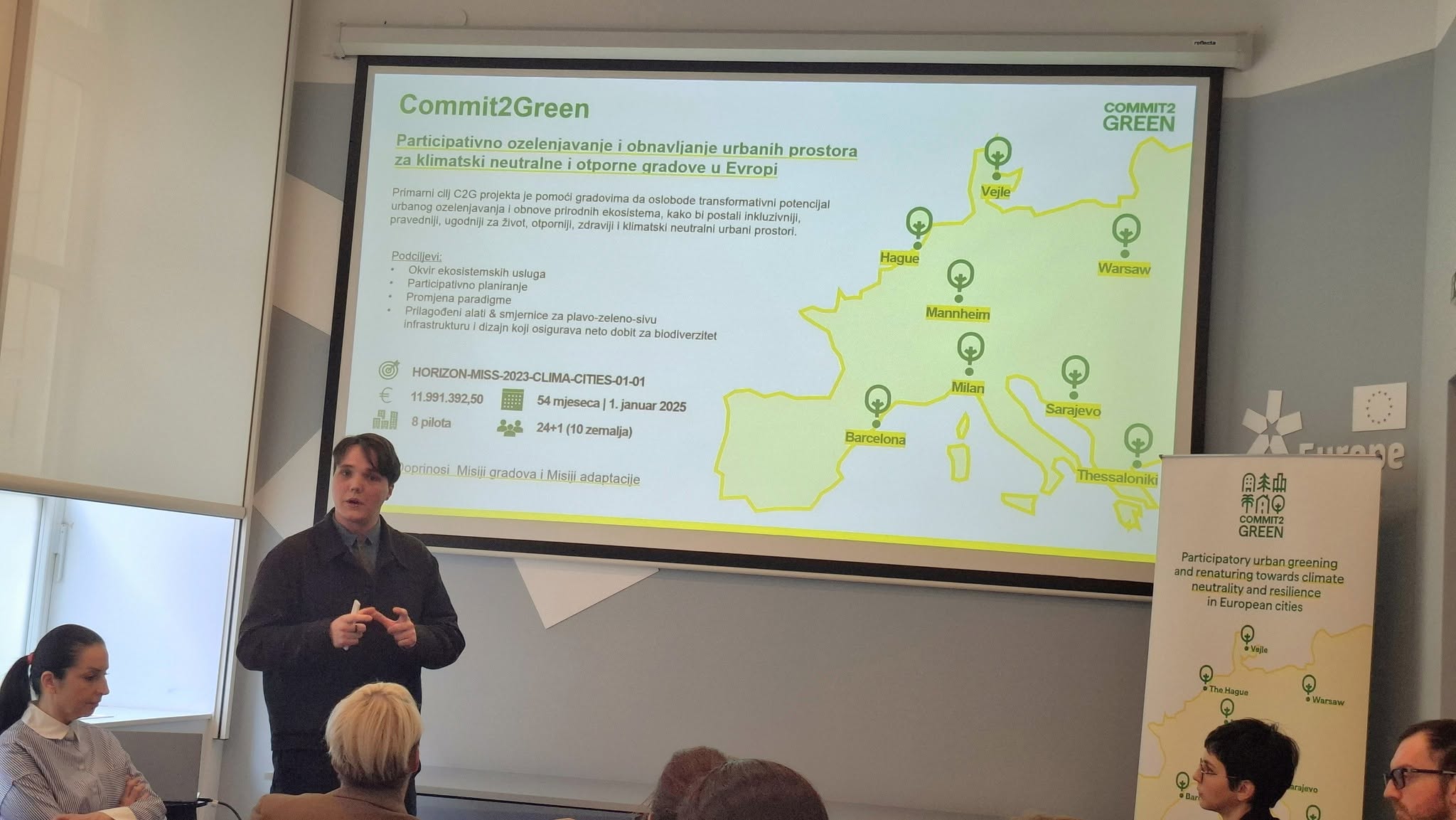
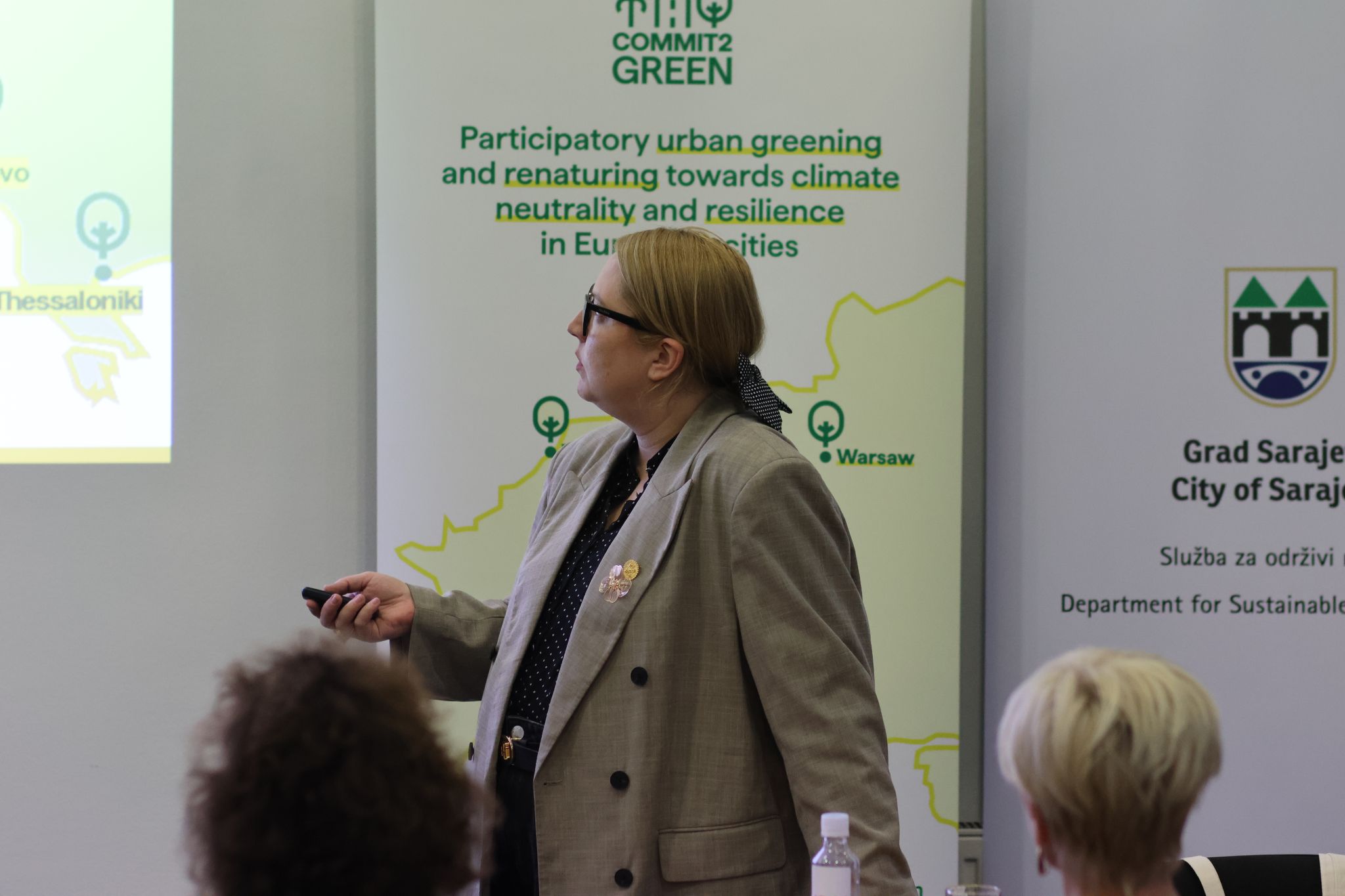
The first City Action Lab workshop series consisted of two separate workshops held with different target groups. The first workshop took place on 11 February 2026 with the Focal Points group, bringing together representatives of institutions, public utility companies, academia, civil society organizations, and experts from various fields. The Focal Points workshop focused on introducing the Commit2Green project, the City Action Lab methodology, and the preliminary results of the vulnerability assessment for the Ciglane pilot area. Participants reviewed spatial analyses related to flood exposure, heat stress, and access to nature and contributed to the validation of findings and identification of priority challenges through expert discussions and group work.
Collaborative mapping exercises enabled participants to identify key hotspot areas and highlighted the importance of integrating local and institutional data into future planning processes. Particular attention was given to stormwater management, urban heat stress, access to green spaces, and opportunities for implementing nature-based solutions in densely built urban environments.
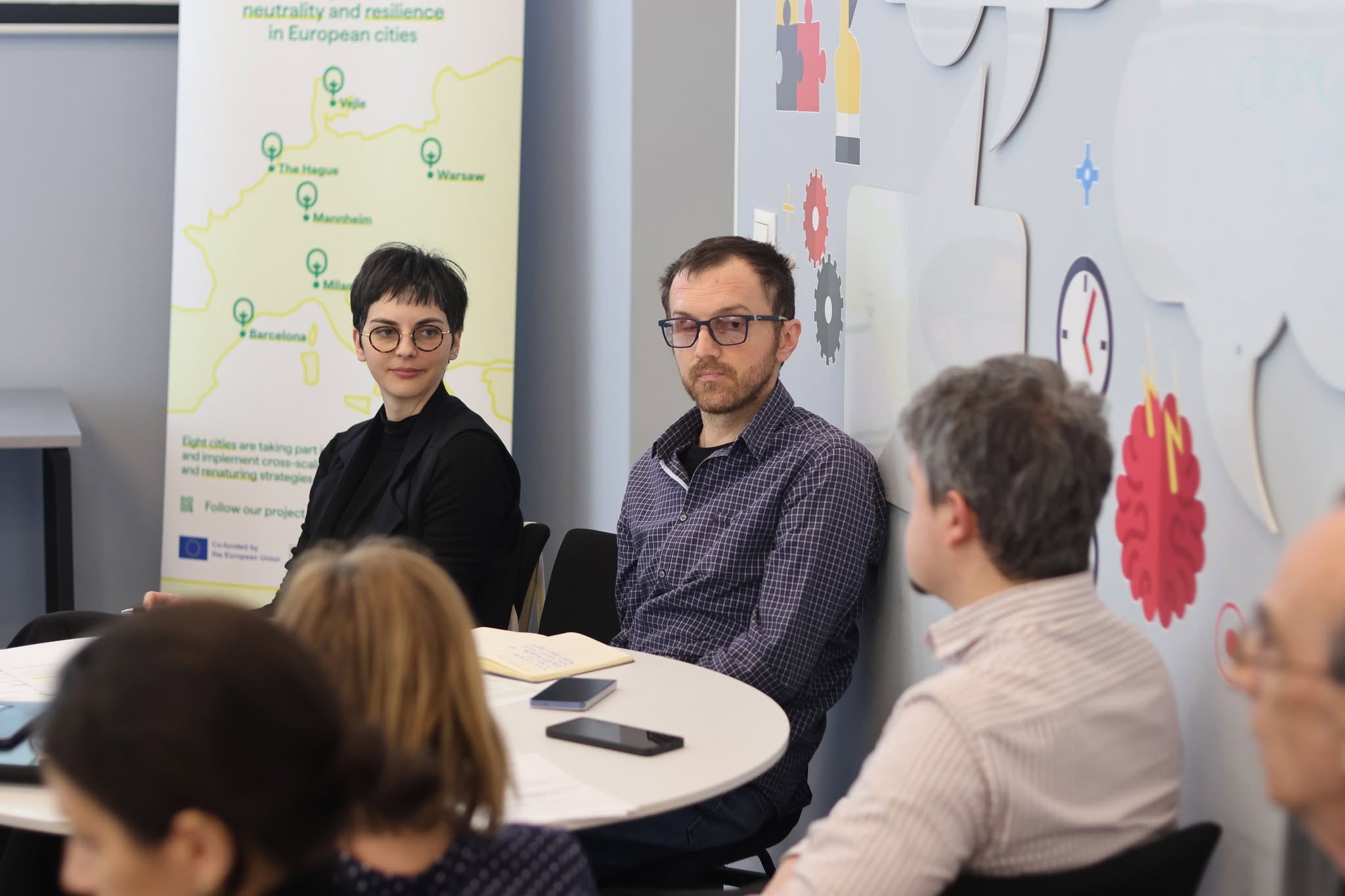
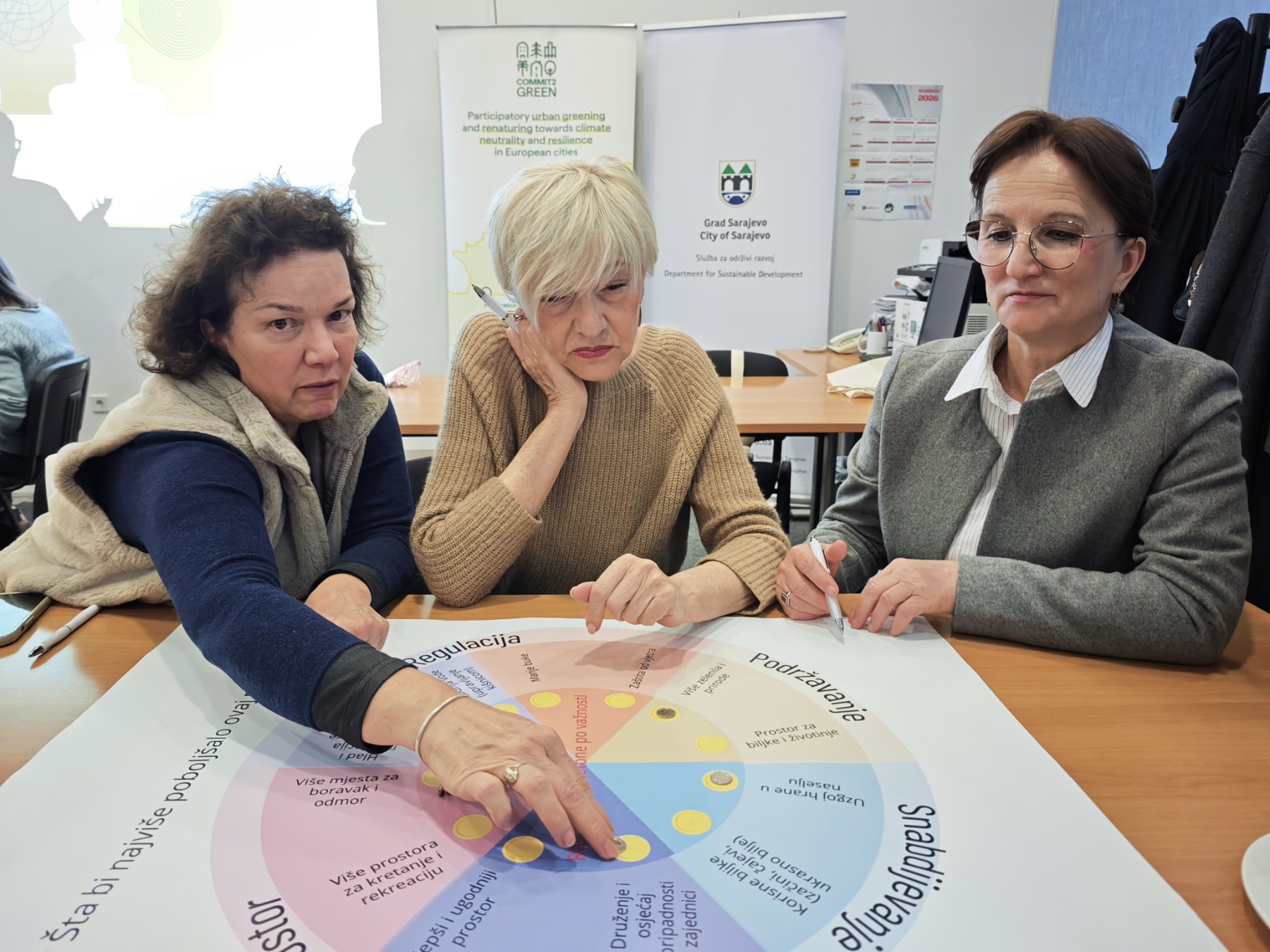
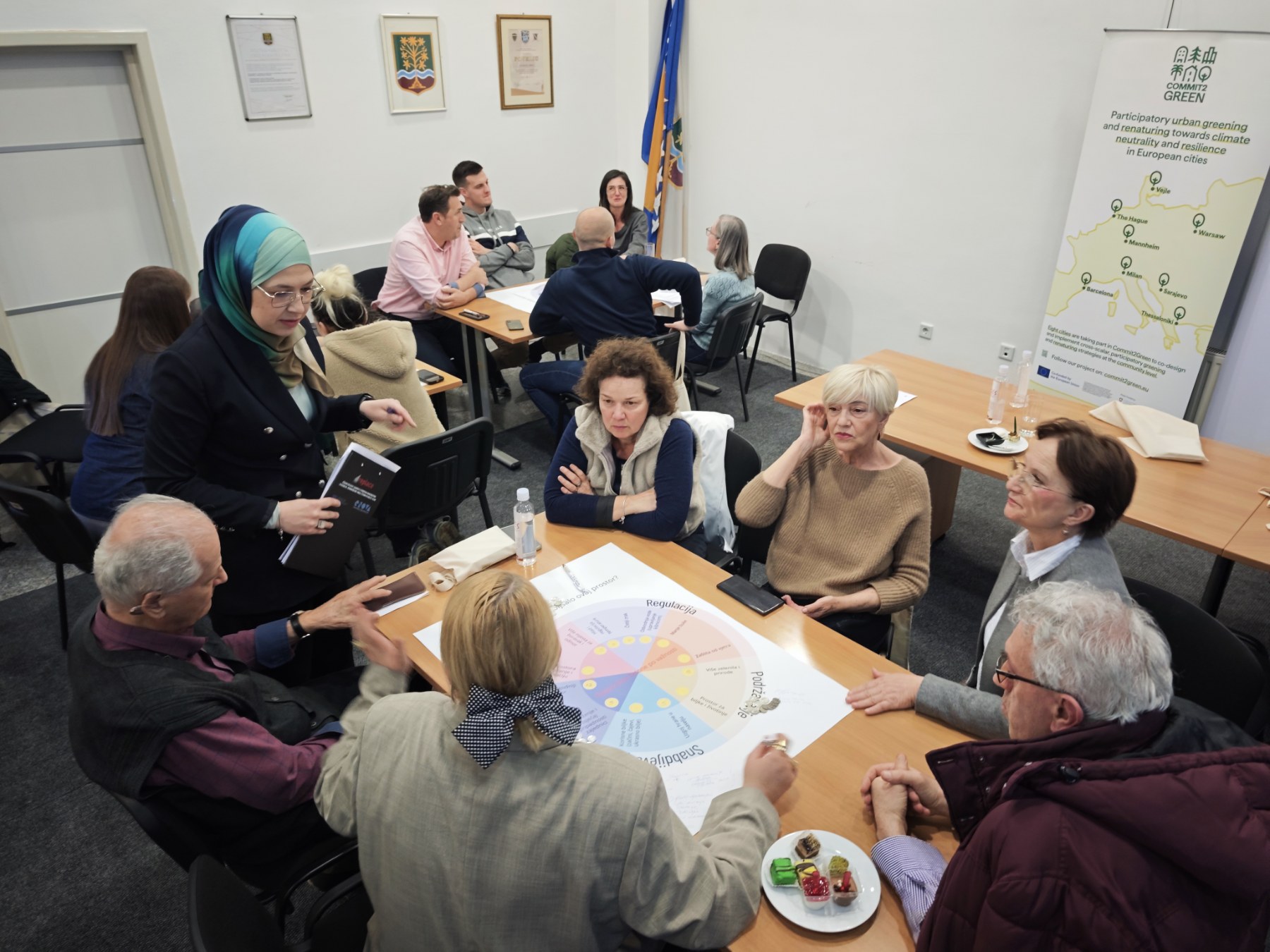
The second workshop was held on 31 March 2026 with the Forum group, comprising residents of the Ciglane neighbourhood, representatives of local businesses, educational institutions, and other relevant community stakeholders. The Forum workshop focused on actively engaging the local community in the planning process to ensure that future interventions respond to the real needs and experiences of space users. As part of the workshop, an ex-ante satisfaction assessment was conducted, providing valuable insights into participants’ perceptions of the area and their expectations regarding future improvements.
The results showed that participants place high importance on air quality, accessible and connected green spaces, thermal comfort, opportunities for recreation and social interaction, and effective stormwater management. At the same time, respondents highlighted the need for improvements in functionality, accessibility, maintenance, safety, and overall environmental quality.
During group discussions, participants identified key challenges affecting the everyday use of the area, including insufficient shade, limited opportunities for staying and socializing, stormwater drainage issues, and a lack of functional green infrastructure. Community members also expressed their willingness to actively participate in future planning and implementation activities.
Building the Foundation for Future Interventions
One of the most significant outcomes of the first City Action Lab workshop series was the creation of a shared foundation for the further development of measures aimed at improving urban spaces, enhancing climate resilience, and creating a more pleasant living environment for residents. Through the collaboration of institutions, experts, and the local community, important groundwork was laid for future activities focused on sustainable spatial planning and strengthening the ecological resilience of the Ciglane neighbourhood.
The City Action Lab represents an innovative approach to urban development planning that emphasizes cooperation, knowledge exchange, and the co-creation of solutions. The workshops held in Sarajevo demonstrated the importance of both professional expertise and citizens’ experiences in developing measures that respond to the real needs of local communities and contribute to the city’s long-term sustainable development.
The activities implemented through the Commit2Green project mark an important step towards building more resilient, greener, and inclusive urban spaces. The experiences and conclusions generated during the first City Action Lab workshop series will serve as a valuable foundation for the next phases of the project and the development of concrete solutions that benefit the citizens of Sarajevo.